What This Remodeling Dispute Reveals About Contracts And Quality
Most homeowners expect some level of disruption during a remodeling project.
Delays happen. Schedules shift. There’s usually a period where things feel a little out of place before they come together.
Sometimes a contractor abandons the job entirely.
That’s the situation a homeowner named Ruthie found herself in.
A Story of Where A Project Began To Break Down
Ruthie and Ashley hired a General Contractor (GC), agreed to a scope of work, and paid a deposit to get started. At first, the project appeared to be moving forward. But it didn’t take long for concerns to surface.
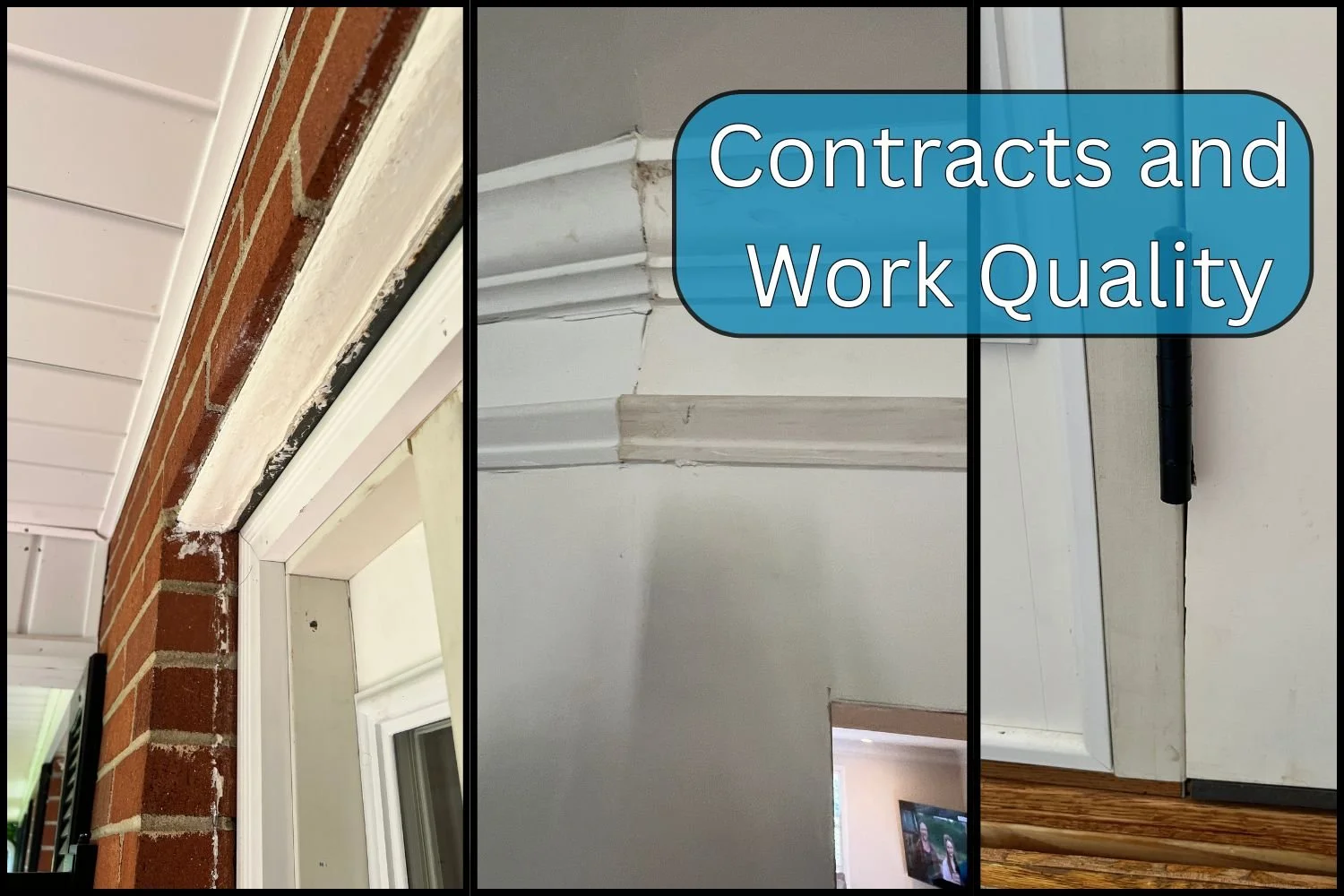
The quality of the work didn’t align with what had been discussed. There were visible issues, including gaps in trim, problems with drywall, and areas that clearly needed to be redone. Those weren’t obvious as issues in the beginning, because there was reason to believe the Contractor was still working on them.
Around that time, however, the GC requested additional payment.
The request didn’t line up with what Ruthie and Ashley understood as the agreed upon payment schedule. And with how little work had been done, the additional payment seemed unusual. When she questioned the payment and stated her reluctance about paying it, the Contractor became unresponsive and stopped showing up.
Now she had a partially completed project, weeks without progress, and growing uncertainty about how to move forward.
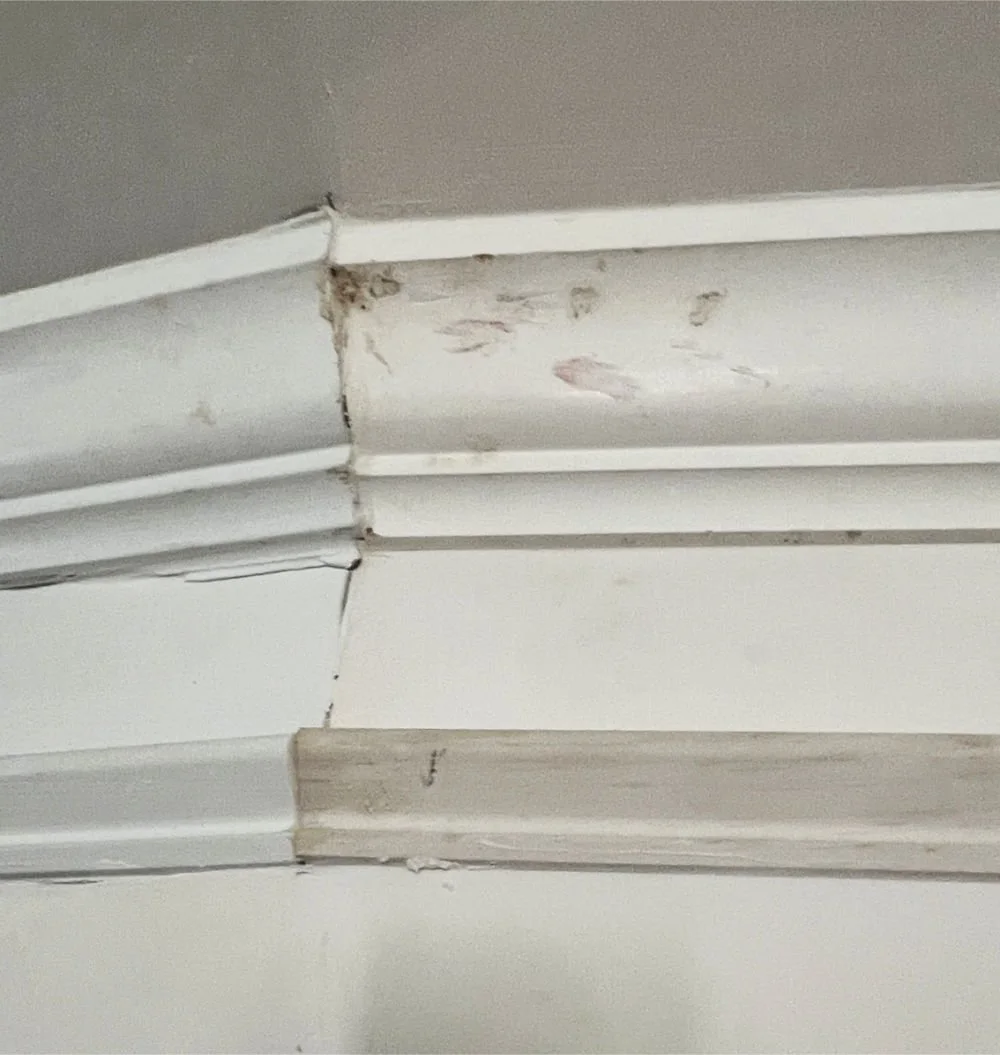
An example of the shoddy trim work that had been done, that hadn’t been addressed at this stage.
This is what prompted Ruthie to take action.
Bringing The Project Back On Track
First and foremost, Ruthie knew she needed a reliable contractor to continue the work. She needed someone to assess what had been done, correct the issues, and move the project forward in a way that made sense.
That’s when Keith Smith Construction was brought in.
When a project changes hands midstream like this, the priority is identifying what can be salvaged, what needs to be redone, and how to approach the rest of the project without creating new issues.
Before we began any of the work, we made sure it was clear to Ruthie and Ashley about what needed to be done and why.
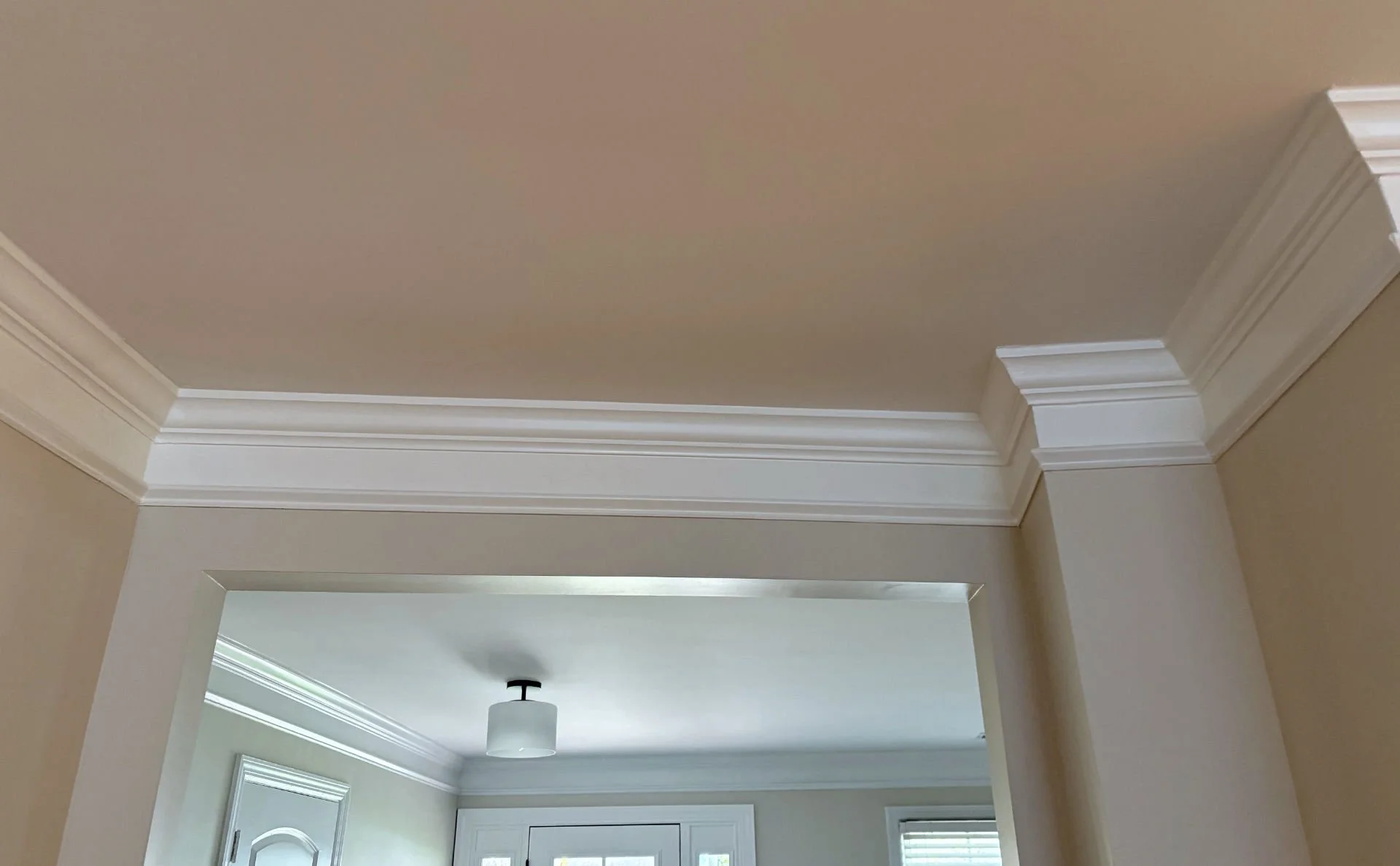
We began by addressing the front door installation, the gaps in the trim, and we needed to rework sections of drywall. As we moved to painting, we were confident that the finished result reflected the quality level Ruthie had expected from the beginning.
When The Dispute Moved Beyond The Project
As the work was being corrected and the project moved forward, the original Contractor reentered the picture with an escalation. They filed a lawsuit against Ruthie, claiming that the additional payment they had requested was still owed.
At that point, what had started as a frustrating construction experience turned into a legal issue.
Ruthie asked Chris Smith of KSC if he would be an expert witness in the case, speaking to the quality of the Contractor’s work to provide his perspective if the case moved forward.
He agreed.
Based on what he had already seen and corrected, he was prepared to explain where the work had fallen short compared to what would be considered acceptable within the industry.
Fortunately for Ruthie, though, this testimony ultimately wasn’t needed. Ruthie and Chris showed up to the courthouse to find the judge very skeptical. For those of you interested in the technical reason: It turned out that the agreement the original Contractor had in place with Ruthie had an arbitration clause, which stated that any disputes must be settled in arbitration before going to court. The judge looked to Ruthie’s prior Contractor and essentially asked, “If your contract says that you should have handled this through arbitration, what are we doing here in court?”
The case was dismissed, and the Contractor did not pursue anything further.
What This Situation Highlights For All Home Construction Projects
When working with a builder, you want to make sure your project proposal is clear and carefully crafted. This is what leads to consistent pricing and projects that wrap without incident. It’s important that each phase of the project is clearly articulated, and that the payment schedule makes sense for everyone.
Ideally, that means the following things are in place from the outset:
Detailed scope of work
Selections defined
Clear payment schedule
Exact quotes
Contract signed by both parties
Verbal communication recapped in a written format
This helps avoid scenarios where:
The homeowner wonders if corners are being cut.
Material costs and contingencies are unclear or unknown.
The contractor feels a sense of scope creep, where the homeowner has asked for changes that weren’t part of the original plan. (And where the pricing or timelines haven’t been adjusted to reflect it.)
This story also brings another important truth to light: build quality doesn’t have to be subjective.
The National Association of Home Builders has general standards for all types of construction. While there are acceptable standards for margins of error, these standards also mean any contractor’s work can be evaluated against them.
That matters when questions come up.
Gaps in trim, uneven finishes, or improperly installed elements aren’t just a matter of opinion. In many cases, they can be measured against established expectations for what this work should look like.
And when those expectations are clearly defined upfront, it becomes much easier to avoid confusion about what should be addressed and what falls within normal tolerances.
Further Reading:
Universal Design - A standard around designs that should be usable by all people, to the greatest extent possible.
-
If you’re planning a home improvement project, you can visit our Pricing page for a free ballpark estimate. From there, you can book a call with one of our experts.