What is the Difference Between Fully Custom Homes and Semi-Custom Homes?
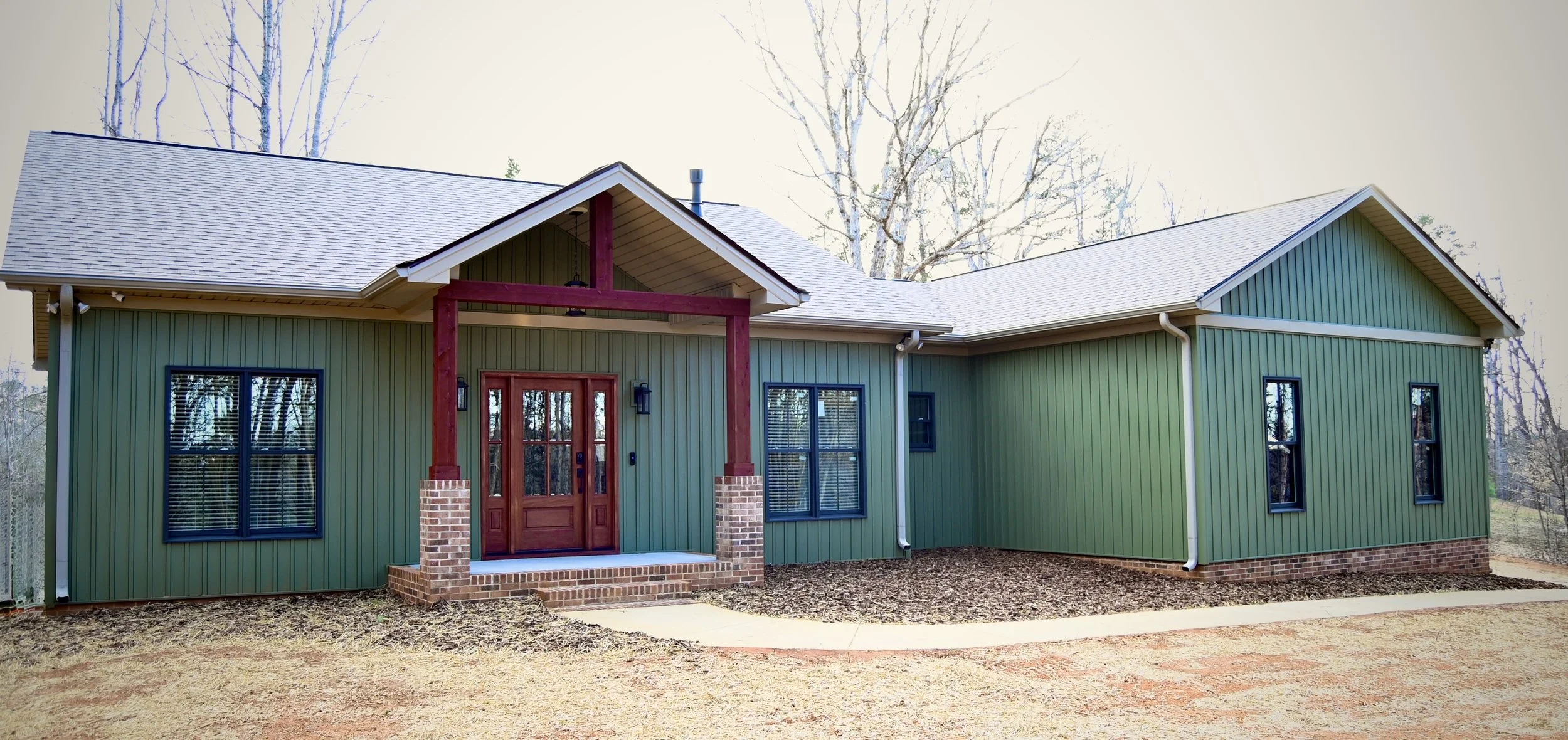
Fully Custom Home in Tobaccoville, NC. 2025.
You’ve decided to build a home. Congratulations! Now it’s time to decide: which approach to building are you going to take?
You may have heard terms like “semi-custom homes” or “custom-built homes,” but it can be difficult to understand the differences between the two. What is “semi” about a “semi-custom” home? Will you feel restricted with a semi-custom plan? Will you feel overwhelmed with a fully custom approach? What are the effects on price?
In this post, we will break down the key distinctions, advantages, and disadvantages semi-custom homes and fully custom homes so you can pursue the route that matches your vision.
How Semi-Custom Homes Work, and Where You’ll Typically See Them
In a semi-custom setup, the builder offers a set of pre-designed floor plans that the prospective buyer can modify to some degree. Buyers can choose from these pre-made plans and may make a few modifications, such as selecting countertop finishes, cabinet color, light fixtures and flooring. Each builder has a different level of customizability. However, the overall layout and construction approach generally do not change. This approach blends personalization with efficiency.
Planned neighborhoods and subdivisions often choose between a mix of production and semi-custom homes. For reference, production homes are fixed designs that a builder will use repeatedly, often in a neighborhood development, to save on cost and time. Semi-custom options offer one step up in flexibility. If you were moving into a development with a mix of production and semi-custom homes, you might tour a model home, then choose a version of that plan to build on one of the lots. Several houses in the development may share similar footprints, rooflines, or layouts, even if the exterior finishes and interior selections vary.
This approach is popular for a few reasons:
Predictability – Pricing and timelines can be easier to estimate because the plans and construction methods are well established.
Fewer decisions – Many choices are narrowed in advance, which can feel less overwhelming for homeowners who don’t want to design every detail.
Efficiency at scale – Working with familiar designs can streamline permitting, ordering, and construction.
Familiarity – Homes in these neighborhoods tend to feel recognizable, which some buyers appreciate from a resale or appraisal standpoint.
In the Triad, production and semi-custom homes are commonly found in newer developments where homes are built in phases, often by builders who focus on volume and consistency.
The Difference of a Custom Home
In a fully custom setup,you are now fully in control of the plans. Here are a few ways to that can happen:
Purchase plans online - If you find plans online that you love, you can purchase them and bring them to your contractor to build. There are many great plans out there. You are choosing to save money on the design process by avoiding hiring an architect or draftsman to draw up plans from scratch. Note, however, that if you need to make modifications to the purchased plan, the design process can quickly meet or exceed the costs of starting from scratch. Therefore, you will want to be highly confident in the plans and your initial revisions from the get-go. Once you have your plans purchased, you’ll bring your plans to your builder of choice.
Use the builder’s previous plans - In some cases, the builder may have unlimited licenses for plans they have built in the past. Through collaboration with the builder who is intimately familiar with the original plan, you may collaboratively turn that plan into a fully custom design without having to start from scratch.
Have plans drawn - Having your plans drawn, particularly by a draftsman within the same organization that will build your home, allows for the highest degree of flexibility for your desires and needs. We recommend working with the builder & draftsman together if you are having plans drawn to ensure your plans do not exceed the desired budget. The builder will bring a pricing perspective into you and your draftsman’s design process.
When does Building Fully Custom Make The Most Sense?
Once you secure your lot, (see our article on what to look for in a lot) it’s time to finally choose: Are we going for a semi-custom or fully custom approach? For those looking for something with more predictability, fewer decisions, and a more efficient design process, we recommend going semi-custom. For those looking to build a home that lasts, invests in the future, and brings a vision fully to life, we recommend going fully custom.
As with all real estate purchases, the primary factor to consider is “location, location, location.” When location is the top priority, you might prefer to build your own home instead of buying a pre-built or semi-custom home on in a sub-optimal location. Finding an area you love away from bunched-up neighbors is the perfect canvas to build your own home from scratch.
That being said, full disclosure— we build fully custom homes! Building a fully custom home is not for everyone, but we have seen a few key reasons our customers fall in love with their choice.
1. Maintaining full control of the design. Instead of having specific plans to work within and a list of a few options to select from, you have complete customization options at your disposal. By working with a design team, you get to pick out which specific flooring, countertops, window types and size, trim design, ceiling height, lights, and much more.
Tip: If your design process involves an interior designer who will mitigate the overwhelming number of choices needed to be made. Be sure to ask your contractor how those selections are made. Designing a home involves thousands of decisions. Working with an interior designer can help you find your style, make selections, and ease the entire process so it isn’t overwhelming. You will still have lots of options and control, but won’t bear all the responsibility of making all of them.
2. The quality of the build will most likely be higher with a custom home rather than semi-custom or production. Semi-custom homes are built “efficiently,” but that often comes with a sacrifice. The builder’s goal is often to finish the home as quickly and efficiently as possible, which can often lead to corners being cut and things being missed. Fully custom builds allow for that additional layer of care.
3. Resale value is a big reason some people consider custom builds. They generally have higher resale value because they are unique, and that becomes all the more true if that home sits on a good piece of land. However, outside of day-to-day market conditions, the true ROI of a fully custom home is the investment in your family across generations. If your children will one day inherit the home, building becomes something that brings value to your family in a way that is difficult to quantify in terms of money.
We have a great construction team, and love working with custom designs!
Our lead builder, Holden, is both skilled and passionate about these types of custom builds. The ability to plan carefully, use higher end supplies, and suit a buyer’s specific vision is incredibly rewarding.
We would love to help you create a home that feels truly yours for many years to come!
If you’re curious, you can view some of our finished custom build photos here.
Otherwise, we’d love to hear from you!